Pacemaker Interference with Stun Guns: Navigating Safety, Technology, and Regulation
Introduction
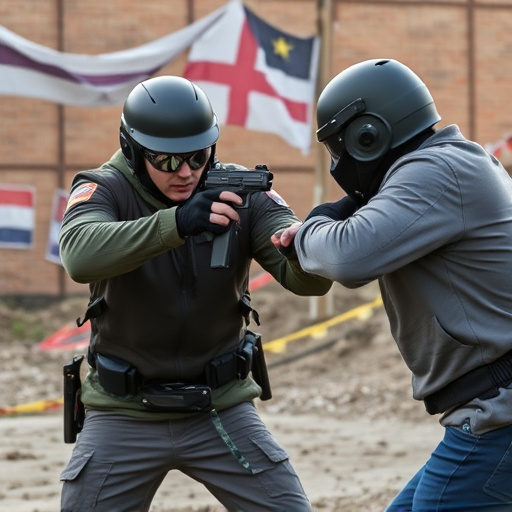
In an era where technology intersects with public safety, the interaction between pacemakers and stun guns has emerged as a critical and often misunderstood phenomenon. "Pacemaker interference with stun guns" refers to the unpredictable effects that electroshock weapons, commonly known as stun guns, can have on individuals with pacemakers due to electromagnetic compatibility issues. This complex topic demands meticulous exploration, as it balances the need for effective law enforcement tools with the paramount importance of safeguarding public health, especially among those relying on life-saving cardiac devices.
This comprehensive article delves into every facet of this pressing issue, offering insights into its historical roots, global implications, technological nuances, regulatory frameworks, and future prospects. By examining real-world case studies and exploring potential solutions, we aim to empower stakeholders—from policymakers to law enforcement agencies and medical professionals—to make informed decisions regarding the deployment of stun guns, ensuring both public safety and the well-being of individuals with pacemakers.
Understanding Pacemaker Interference With Stun Guns: A Deep Dive
Definition and Core Components
Pacemaker interference with stun guns occurs when the electromagnetic energy emitted by a stun gun disrupts the normal functioning of a pacemaker implant, potentially leading to adverse events. Pacemakers are electronic medical devices that regulate heart rhythm by delivering electrical impulses to stimulate contractions. Stun guns, on the other hand, utilize high-voltage electrical pulses to immobilize subjects through muscular convulsions. The conflict arises from the fact that both devices operate within similar frequency ranges, making them susceptible to electromagnetic interference (EMI).
Key Components:
- Pacemaker (PM): A small device surgically implanted in the chest or abdomen to regulate heart rhythm. It includes a power source, a control module, and electrical leads that stimulate the heart muscle.
- Stun Gun: A handheld electroshock weapon that delivers a high-voltage, low-current electric shock through two metal probes attached to the device.
- Electromagnetic Compatibility (EMC): The ability of electronic equipment to operate without adverse interaction when used simultaneously. In this context, EMC ensures pacemakers remain functional despite the presence of stun guns.
Historical Context and Significance
The issue of pacemaker interference with stun guns has been a growing concern since the widespread adoption of pacemakers in the 1970s and the introduction of stun guns as non-lethal force options by law enforcement agencies in the late 20th century. As both technologies became more prevalent, incidents of EMI-related complications began to surface, highlighting the need for better understanding and regulation.
The significance of this issue lies in several critical areas:
- Public Safety: Law enforcement agencies require effective tools to subdue individuals without causing permanent harm. Stun guns offer a non-lethal alternative to firearms, but their safety must be ensured, particularly when encountering individuals with pacemakers.
- Healthcare: Pacemaker recipients rely on these devices for survival. Any interference that disrupts pacemaker function can have severe consequences, including cardiac arrest.
- Regulatory Compliance: Manufacturers of both pacemakers and stun guns face stringent regulations to ensure product safety. Understanding and mitigating interference is crucial for compliance.
Global Impact and Trends
The global impact of pacemaker interference with stun guns is substantial, given the widespread use of both technologies across diverse regions.
Regional Variations:
- North America: The United States and Canada have seen a rise in stun gun adoption by law enforcement and private citizens alike. Pacemaker penetration rates are higher in these countries, leading to increased scrutiny of potential interference.
- Europe: Strict EMC regulations in the European Union (EU) have driven technological advancements to minimize pacemaker interference from various electronic devices, including stun guns.
- Asia-Pacific: Rapidly growing law enforcement markets in countries like China and India are witnessing an influx of stun guns, while the region's high pacemaker adoption rates necessitate ongoing research into interference mitigation.
- Latin America and Middle East: These regions exhibit varying levels of stun gun usage, with limited formal studies on pacemaker interference. Increased awareness and collaboration between healthcare and law enforcement communities are needed.
Key Global Trends:
- Growing Stun Gun Market: The global stun gun market is expanding due to increasing civilian adoption, driven by concerns over personal safety and security.
- Technological Advancements in Pacemakers: Ongoing innovations in pacemaker design, including more sophisticated EMI shielding, aim to enhance their resilience against interference.
- Regional Regulatory Disparities: Significant variations in EMC regulations across regions pose challenges for manufacturers seeking global market access.
Economic Considerations
The economic landscape surrounding pacemaker interference with stun guns is complex and multifaceted.
Market Dynamics:
- Stun Gun Market: The global stun gun market size was valued at USD 274.5 million in 2021 and is projected to grow at a CAGR of 7.8% from 2022 to 2030 (Grand View Research). This growth is primarily driven by rising security concerns, particularly in North America and Europe.
- Pacemaker Market: The global pacemaker market reached USD 9.6 billion in 2021 and is expected to grow at a CAGR of 4.5% from 2022 to 2030 (Fortune Business Insights). Increased life expectancy and the rising prevalence of cardiovascular diseases drive market expansion.
Impact on Manufacturers:
- Stun Gun Producers: Companies manufacturing stun guns must navigate regulatory hurdles, especially in regions with stringent EMC standards. Ongoing research into EMI reduction is crucial for maintaining market competitiveness.
- Pacemaker Manufacturers: The need to design pacemakers that are less susceptible to interference from external sources has spurred technological advancements and increased R&D investments.
Healthcare Costs:
Potential incidents of pacemaker interference due to stun gun usage can lead to significant healthcare costs, including device revisions, reoperations, and emergency room visits. These costs contribute to broader healthcare expenditure trends, particularly in regions with aging populations and high pacemaker penetration rates.
Technological Aspects and Solutions
Addressing pacemaker interference with stun guns requires a deep understanding of electromagnetic interactions and technological innovations.
EMI Prevention and Mitigation:
- Stun Gun Design: Manufacturers can employ advanced EMI shielding techniques, such as using conductive materials and shielding gases, to reduce the device's electromagnetic signature. Customized probe designs that minimize field concentration around pacemakers can also be explored.
- Pacemaker Enhancements: Future pacemaker generations may incorporate enhanced EMC protection features, including improved shielding and intelligent interference detection mechanisms.
- Signal Processing Techniques: Advanced signal processing algorithms can detect and mitigate EMI in real time, ensuring pacemaker functionality during stun gun deployment.
Research and Development:
Ongoing research collaborations between healthcare, academic, and law enforcement institutions are vital to developing robust solutions:
- Field Studies: Conducting extensive field tests with various pacemaker models and stun guns can provide valuable data on interference patterns and severity.
- Simulation and Modeling: Using computer simulations to model electromagnetic interactions offers insights into optimal design strategies for both devices.
- Clinical Trials: Rigorous clinical trials evaluating the safety and effectiveness of new EMI mitigation technologies are essential before widespread implementation.
Regulatory Frameworks and Collaborations
Regulatory bodies play a pivotal role in ensuring the safe integration of stun guns and pacemakers, fostering public trust, and advancing technological innovations.
International Standards:
- International Electrotechnical Commission (IEC): The IEC develops international standards for electromagnetic compatibility, providing guidelines for both pacemaker and stun gun manufacturers to ensure compliance.
- International Organization for Standardization (ISO): ISO standards focus on medical device safety and performance, including requirements for EMI testing and mitigation.
Regional Regulations:
- United States: The Food and Drug Administration (FDA) regulates pacemakers and has issued guidance on potential interference from external devices. Law enforcement agencies, such as the Federal Bureau of Investigation (FBI), also contribute to EMI research and standards development.
- European Union: The EU's EMC directives ensure that all electronic equipment, including stun guns, complies with strict EMI standards. The European Commission actively collaborates with industry and healthcare professionals to address emerging issues.
- Other Regions: Countries like Canada, Australia, and Brazil have their own regulatory frameworks, often adopting international standards as a basis for local regulations.
Public-Private Partnerships:
Collaborations between government agencies, law enforcement, healthcare providers, and industry leaders are essential for comprehensive solutions:
- Information Sharing: Establishing databases that document incidents of pacemaker interference from stun guns can provide valuable insights for both industries.
- Joint Research Initiatives: Public-private partnerships should fund research into advanced EMI mitigation technologies, ensuring safety without compromising the effectiveness of law enforcement tools.
- Standardization Efforts: Collaborative efforts to develop and promote universally accepted standards for EMI compatibility will facilitate safer product design and deployment.
Future Prospects and Recommendations
As technology continues to evolve, so too will the challenges and opportunities surrounding pacemaker interference with stun guns.
Emerging Technologies:
- Wireless Communication Integration: Stun guns equipped with advanced wireless communication capabilities can provide real-time data on EMI events, allowing for quicker response and mitigation strategies.
- AI-Driven EMI Prediction: Artificial intelligence algorithms could predict interference patterns based on device characteristics and environmental factors, enabling proactive measures.
Recommendations:
- Enhanced Research Collaboration: Strengthening partnerships between healthcare, academic, and law enforcement institutions is crucial for advancing knowledge and developing practical solutions.
- Continuous Monitoring: Implementing ongoing monitoring systems to track EMI incidents and identify emerging trends will inform regulatory actions and industry practices.
- Multidisciplinary Approach: Encouraging collaboration among electrical engineers, biomedical engineers, and law enforcement experts can lead to innovative solutions that address technical, legal, and ethical considerations.
- Public Awareness and Education: Raising public awareness about pacemaker safety during stun gun usage can foster informed decision-making and reduce potential incidents.
- Regular Updates to Standards: Regulatory bodies should regularly review and update EMI compatibility standards to keep pace with technological advancements.
In conclusion, addressing pacemaker interference from stun guns requires a multifaceted approach that combines technological innovations, regulatory oversight, and collaborative efforts across multiple sectors. By prioritizing safety without compromising law enforcement capabilities, society can ensure the harmonious integration of these essential tools for both healthcare and public security.
November 14, 2025
Pacemaker Interference With Stun Guns
Pacemaker Interference With Stun Guns poses serious risks due to high voltage discharge, potentially.......
Read more →
November 12, 2025
Pacemaker Interference With Stun Guns
Understanding muscle incapacitation from stun guns is crucial. Electric current disrupts muscle cont.......
Read more →
November 10, 2025
Pacemaker Interference With Stun Guns
Compact stun guns pose a risk of Pacemaker Interference With Stun Guns due to electromagnetic emissi.......
Read more →
November 8, 2025
Pacemaker Interference With Stun Guns
Stun guns temporarily incapacitate targets with high-voltage, low-current pulses but pose risks to i.......
Read more →
November 6, 2025
Pacemaker Interference With Stun Guns
Electrical charge weapons like stun guns pose significant risks to individuals with pacemakers due t.......
Read more →
November 4, 2025
Pacemaker Interference With Stun Guns
Stun guns utilize high-voltage pulses to temporarily paralyze targets through muscle disruption. Pac.......
Read more →
November 2, 2025
Pacemaker Interference With Stun Guns
Stun guns temporarily disable targets through electrical pulses, but pose a Pacemaker Interference W.......
Read more →
October 31, 2025
Pacemaker Interference With Stun Guns
Stun guns, while useful for self-defense, pose a risk to users with pacemakers due to electrical int.......
Read more →
October 29, 2025
Pacemaker Interference With Stun Guns
Electrical arcs from stun guns pose significant risk to pacemaker users, potentially disrupting devi.......
Read more →
October 27, 2025
Pacemaker Interference With Stun Guns
People with pacemakers must exercise caution when considering stun guns due to potential interferenc.......
Read more →
October 25, 2025
Pacemaker Interference With Stun Guns
Stun weapons, including projectile and contact types, pose risks to users with pacemakers due to pot.......
Read more →
October 24, 2025
Pacemaker Interference With Stun Guns
Stun guns pose a risk of pacemaker interference due to electrical currents, potentially causing dama.......
Read more →
October 22, 2025
Pacemaker Interference With Stun Guns
Stun guns pose risks to users with pacemakers due to electrical interference. Modern stun gun design.......
Read more →
October 20, 2025
Pacemaker Interference With Stun Guns
Pacemaker interference with stun guns occurs due to shared electromagnetic spectrum usage, leading t.......
Read more →
October 18, 2025
Pacemaker Interference With Stun Guns
Stun guns pose risk to pacemaker wearers due to electromagnetic pulses (EMPs). Advanced stun gun mod.......
Read more →
October 16, 2025
Pacemaker Interference With Stun Guns
Stun gun performance varies by design and power source, with ranges from short to long. Environmenta.......
Read more →
October 14, 2025
Pacemaker Interference With Stun Guns
People with pacemakers face heightened risks from stun guns due to potential interference disrupting.......
Read more →
October 11, 2025
Pacemaker Interference With Stun Guns
Obtaining non-lethal weapon certification for stun guns requires understanding legalities and safety.......
Read more →
October 9, 2025
Pacemaker Interference With Stun Guns
Stun guns' high-voltage pulses can interfere with pacemaker function due to their reliance on e.......
Read more →
October 7, 2025
Pacemaker Interference With Stun Guns
Stun guns, despite benefits for self-defense, pose risks to individuals with pacemakers due to elect.......
Read more →
October 5, 2025
Pacemaker Interference With Stun Guns
People with pacemakers must exercise extreme caution when considering stun guns, as these devices ca.......
Read more →
October 3, 2025
Pacemaker Interference With Stun Guns
Stun gun stopping power ratings measure effectiveness in temporarily disabling attackers but don&#03.......
Read more →
October 1, 2025
Pacemaker Interference With Stun Guns
Stun guns pose risk of Pacemaker Interference due to high-voltage electromagnetic waves, potentially.......
Read more →
September 29, 2025
Pacemaker Interference With Stun Guns
Stun guns pose risks to individuals with pacemakers due to potential interference with device functi.......
Read more →
September 27, 2025
Pacemaker Interference With Stun Guns
Handheld electrical self-defense weapons like stun guns and tasers differ in operation, with stun gu.......
Read more →
September 25, 2025
Pacemaker Interference With Stun Guns
Stun guns pose a unique risk to pacemaker users due to potential electromagnetic interference. Manuf.......
Read more →
September 23, 2025
Pacemaker Interference With Stun Guns
Clothing affects voltage penetration from stun guns, impacting pacemaker function. Thick clothing in.......
Read more →
September 21, 2025
Pacemaker Interference With Stun Guns
Weather-resistant stun guns can interfere with pacemakers due to electrical signals. Users with pace.......
Read more →
September 19, 2025
Pacemaker Interference With Stun Guns
Stun device batteries vary in size and type, with lithium-ion offering longer lifespans but potentia.......
Read more →
September 17, 2025
Pacemaker Interference With Stun Guns
Pacemaker interference with stun guns poses a significant risk to users with these medical devices........
Read more →
September 15, 2025
Pacemaker Interference With Stun Guns
Stun guns pose a risk to users with pacemakers due to their electrical current, potentially disrupti.......
Read more →
September 13, 2025
Pacemaker Interference With Stun Guns
Compact stun guns offer portability and power but pose risks to users with pacemakers due to potenti.......
Read more →
September 11, 2025
Pacemaker Interference With Stun Guns
Stun guns pose a risk to pacemaker wearers due to electromagnetic pulses (EPDs) that can interfere w.......
Read more →
September 9, 2025
Pacemaker Interference With Stun Guns
Stun guns' powerful electromagnetic pulses can interfere with pacemaker electrical impulses, po.......
Read more →
September 7, 2025
Pacemaker Interference With Stun Guns
Stun guns designed with built-in safety features minimize electrical interference with pacemakers, e.......
Read more →
September 5, 2025
Pacemaker Interference With Stun Guns
Despite stun guns' effectiveness in self-defense, they pose a critical risk to individuals with.......
Read more →
September 3, 2025
Pacemaker Interference With Stun Guns
When choosing a tactical stun gun holster for safety or law enforcement, prioritize functionality, r.......
Read more →
September 1, 2025
Pacemaker Interference With Stun Guns
People with pacemakers face a significant risk of pacemaker interference from stun guns due to their.......
Read more →
August 30, 2025
Pacemaker Interference With Stun Guns
Stun guns pose risks of pacemaker interference due to close electrode placement, potentially causing.......
Read more →